No game survives forty years without someone to look after it. La Abadía del Crimen (The Abbey of Crime) has had many guardians: programmers who took it apart instruction by instruction, artists who redrew it, and fans who carried it to machines that were science fiction in 1987. Two names stand out among them, Manuel Pazos and Antonio Giner, who around the same time, each with his own project, unravelled its code and helped each other.
Liber II
The Heirs
The abbey that never closed its doors.
Antonio Giner
Antonio Giner is an architect by profession. He first saw La Abadía in magazine screenshots and later got hold of the PC version. He had taught himself machine code, disassembling games to see how they worked. In 1999 he began adapting the abbey to the computers of the day, starting from the original PC program with no source code, working out by trial and error what each part of the program did. In November 1999 he opened abadiadelcrimen.com, the remake's website, now gone (the oldest capture kept by the Internet Archive dates from 2002). In February 2001, while Giner was studying in Finland on an Erasmus grant, Manuel Pazos, who was working on his MSX2 version, got in touch with him, as Obsequium recounts. From then on the two lent each other a hand: Giner gave him his graphics and helped with the drawing routines, and Pazos is credited in the PC remake for interpreting the code. Along the way there were surprises, such as rooms that exist on the map but cannot be reached, and graphics the game never used.
The VGA version for MS-DOS (2000–2001)
His first version was not a new game but the original PC release, touched up: a small assembly loader read the 1988 program and patched it in memory to replace the CGA graphics with new 256-color VGA ones, in sober stone tones true to the spirit of the original. The first preview, dated 23 December 2000, was already playable, though still without sound; its code was signed by Antonio Giner and Eduardo Ruiz Moreno. Giner insisted that he did not want to improve the game, but to let new generations live the original experience.
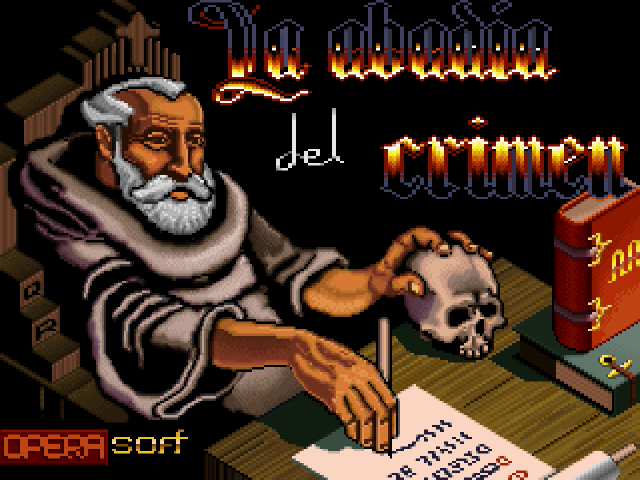
Own screenshot with DOSBox Staging
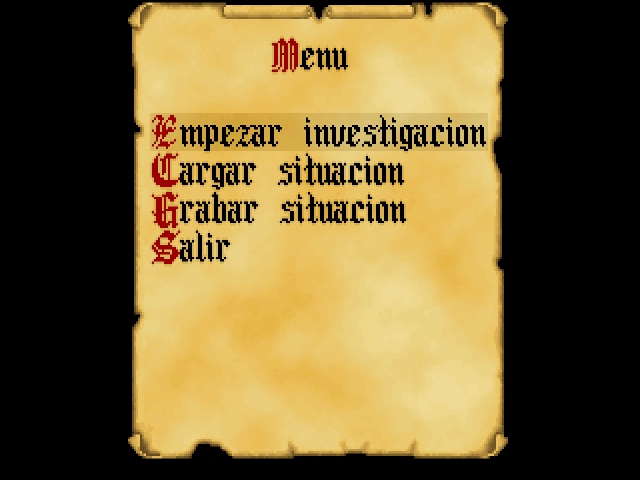
Own screenshot with DOSBox Staging
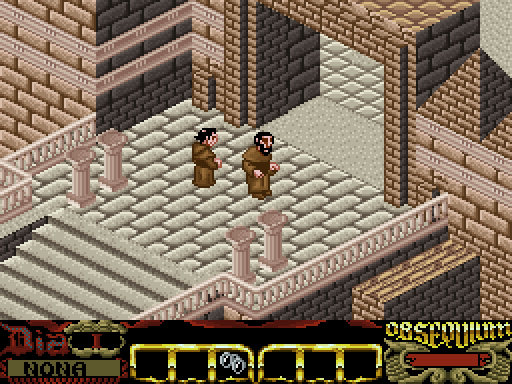
Own screenshot with DOSBox Staging
From DOS to Windows (2004–2008)
The demise of MS-DOS left the project at a dead end. The solution was to start from scratch: Giner turned the disassembly of the original into code a modern assembler could build, and from it produced a native Windows application. In late 2004 he announced that the 32-bit version was ready, and the public release came in December 2008. It keeps the VGA graphics and adds music adapted by Rubén Pérez "ReuWeN", an introductory parchment whose pages turn, a save and load menu on the ESC key, and translations into several languages. By Giner's own account, it took more than ten years of part-time work, mostly during holidays.
He also helped Manuel Pazos with his MSX2 version: thanks to Giner, Pazos was able to disassemble the parts of the game that draw the screens, the characters and the parchment.
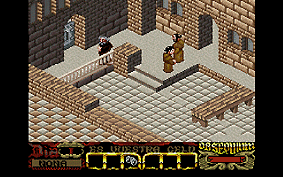
Screenshot: Computer Emuzone
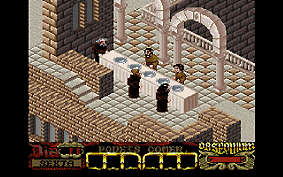
Screenshot: Computer Emuzone
Manuel Pazos
Pazos came to MSX in 1985 with a Canon V20 and taught himself assembly language. Since then he has written some of the best-loved titles of the Spanish scene, such as Sonyc and KPI Ball, and together with Armando Pérez he created the MegaFlashROM cartridge. Later he worked on games for mobile phones and handheld consoles. His relationship with La Abadía goes back more than twenty years and began with disassembling its code.
MSX2 (2001)
The first major reinterpretation. Starting from an earlier patch by Armando Pérez "Ramones" that allowed saving games to disk, Pazos brought the abbey to the 16 colors of the MSX2 with graphics provided by Antonio Giner. Its most beautiful detail is the three palettes that change with the time of day. It runs on MSX2, MSX2+ and Turbo R, includes an English version, and was distributed for free.
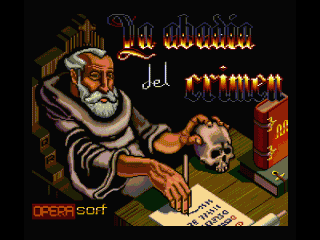
Screenshots: Computer Emuzone
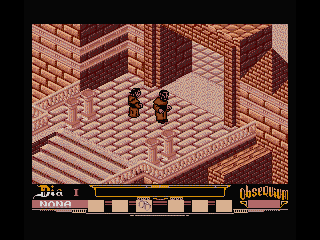
Screenshots: Computer Emuzone
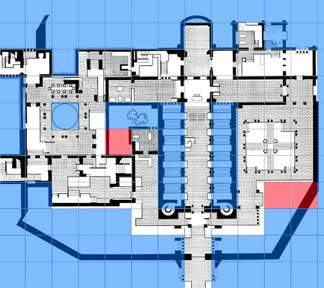
Image: Manuel Pazos, Wikimedia Commons, CC BY-SA 3.0
Java ME (2005)
In October 2005 the abbey reached mobile phones through Movistar, Amena and Vodafone, through eBrain, the studio where Pazos worked. He programmed it himself: with Antonio Giner's help he had disassembled the routines that draw the screens, the characters and the parchment, and he later analyzed the whole MSX version. Since some phones limited games to 64 KB, the entire program had to fit in a single Java class. It used the graphics from the PC remake and added bug fixes, several save slots, palettes that depend on the time and place, and faster-paced action.
La Abadía del Crimen Extensum (2016)
The culmination. Released in March 2016 for Windows, macOS and Linux, Extensum was programmed by Pazos in Java, building on his mobile version and the browser applet he made later, with graphics by Daniel Celemín, music with Gregorian chant by Daniel Cañadas and translation by Augusto Ruiz. It also has a gift: the final screen was drawn by Juan Delcán, the graphic artist of 1987.
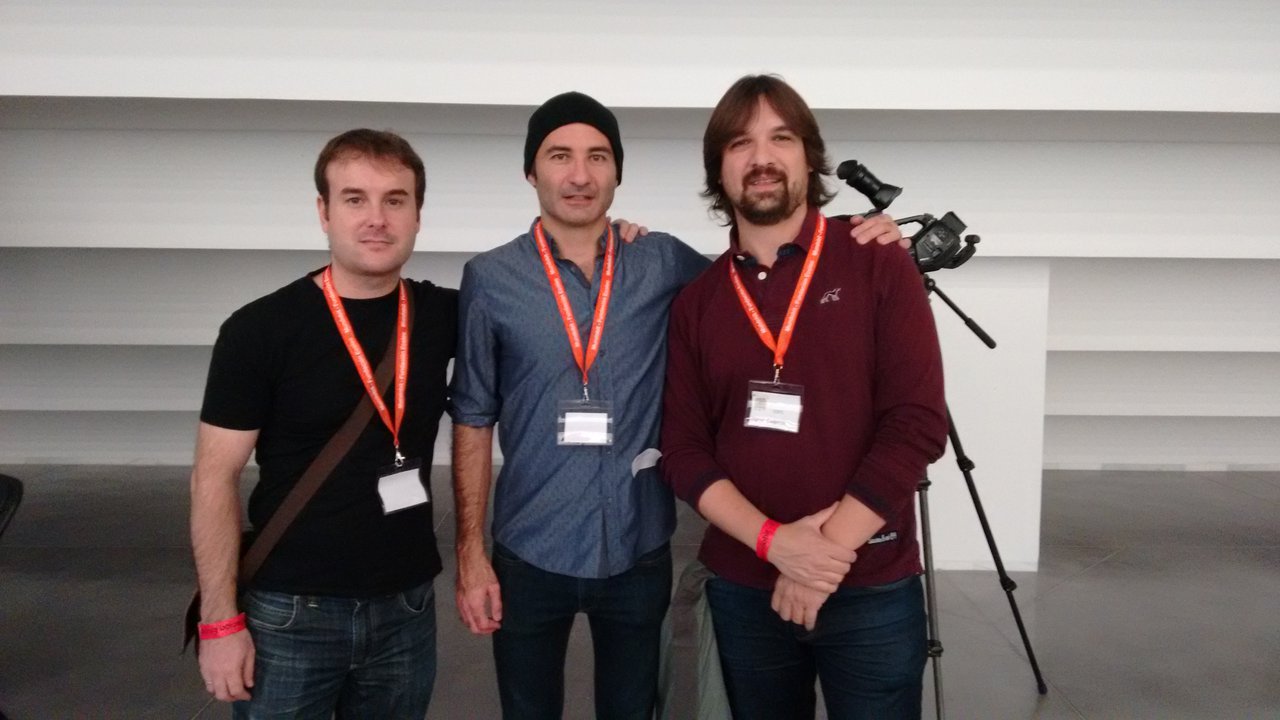
Photo: Extensum website
It is far more than a facelift: it expands the map and adds characters, cutscenes, and elements from the novel and the film.
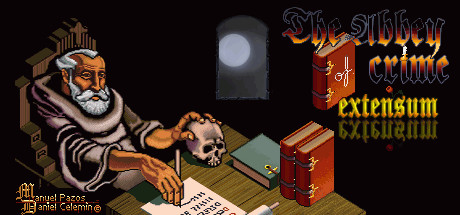
Image: Steam
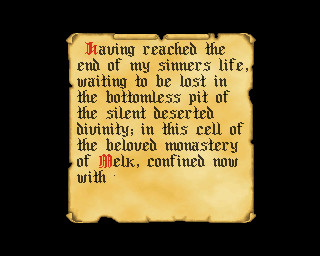
Image: Steam
It also softens the rough edges of the original, with saving at any time, smoother movement and a more lenient Obsequium penalty, and it offers classic or directional controls. It is free.
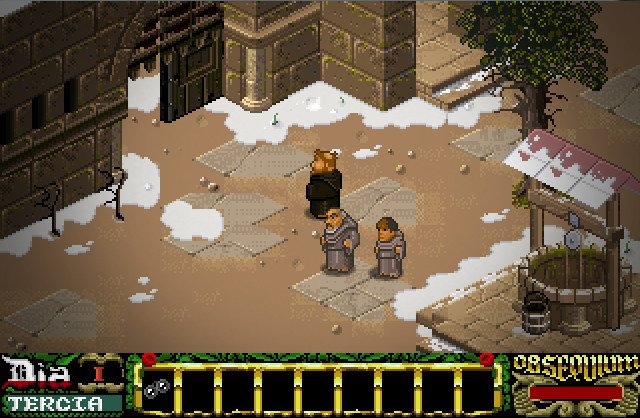
Image: Steam
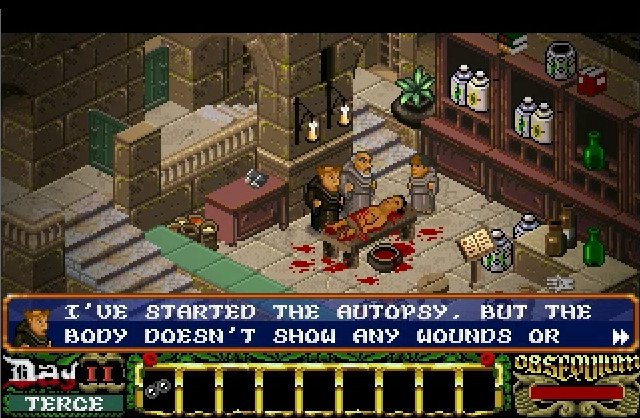
Image: Steam
Behind the abbey walls
At the 2011 Gamefest, organized by RetroMadrid, Manuel Pazos and Antonio Giner gave a talk about what they had discovered while taking the game apart. It is in Spanish.
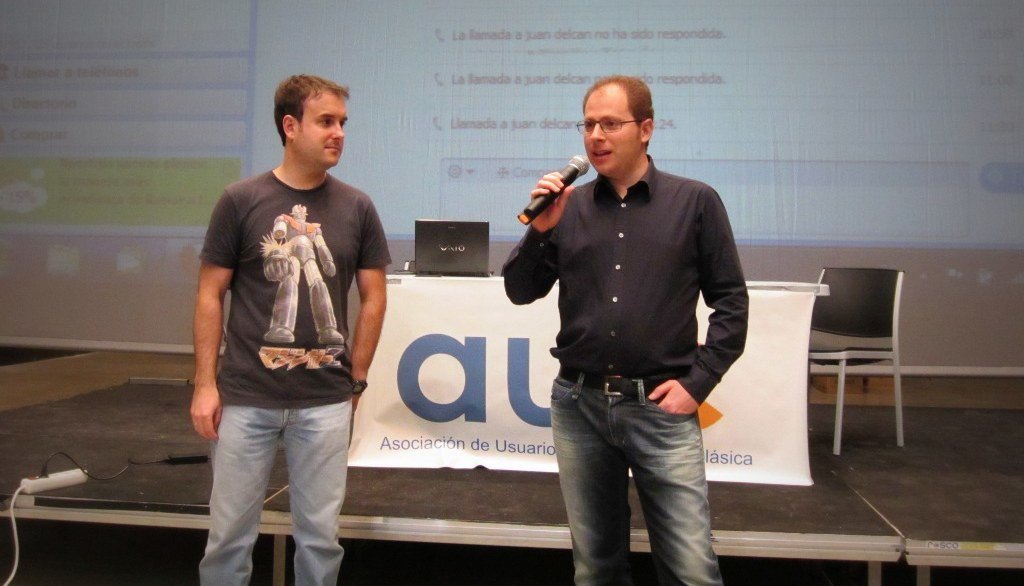
Photo: Xataka
Video: RetroMadrid on YouTube
The community
A whole family of projects has grown up around the abbey:
- Vigasoco, by Manuel Abadía (2003–2005): the commented disassembly of the CPC version and its rewrite in C++, the basis of many later versions. It was also a key reference for this demake.
- VigasocoSDL, which brings the engine to Linux, Mac, PS2, PS3, Dreamcast and the browser via WebAssembly.
- Versions by Javier Abadía for iOS (Swift), Visual Basic and .NET, and others in Java/GWT, JavaScript and for handhelds such as the RG350.
Amstrad PCW (2012)
Opera Soft brought almost its entire catalog to the Amstrad PCW, Amstrad's office computer, thanks to a common development system for its games. La Abadía was made separately and never reached that machine.
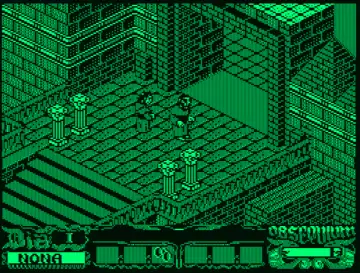
In August 2012, Habisoft ("Habi") released the first version of its conversion, made from the CPC one: it could be played from start to finish, although it could not yet save games. Version 2.0, from 2016, added graphical improvements, digitized sound, support for the DK'Tronics joystick interface and fixes for several bugs, some inherited from the original. In May 2017, for the game's 30th anniversary, PCWwiki released it on a double-sided 3-inch disk, with the PCW 8256 and 8512 on one side and the 9512 on the other, boxed and with a Spanish-language leaflet.
Screenshot: Computer Emuzone
An earlier attempt for the Atari 2600 (2015–2021)
This demake is not the first to bring the abbey to the Atari 2600. Between 2015 and 2018, a programmer who goes by "gfvh" (VH Soft on YouTube) posted videos of his tests in Stella: rooms in isometric perspective with a character, a title screen and a monk with the caption "LETS PRAY". By his own account, his first game on the AtariAge forums was a text adventure based on La Abadía, and he made several versions with isometric graphics.
In July 2021 he posted "the nth incarnation" of the project on AtariAge, a different take: animated scenes where you press the right direction at the right moment, in the style of Dragon's Lair. It takes 256 KB, runs in Stella, and was entered in the 1-Bit Jam on itch.io. Little else is known about the project.
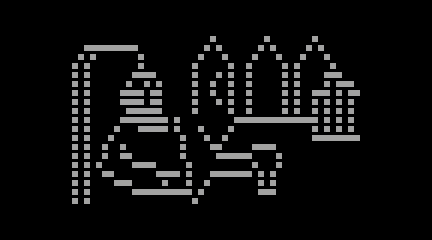
Own screenshot in Stella of the 2021 ROM (
animZ4.bin), with both alternating fields combined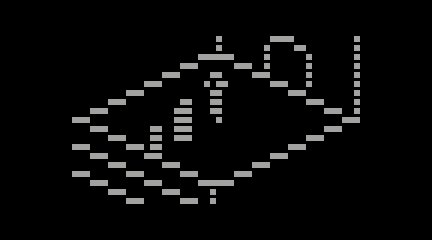
Own screenshot in Stella of the 2021 ROM (
animZ4.bin), with both alternating fields combined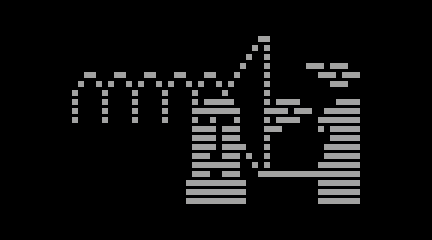
Own screenshot in Stella of the 2021 ROM (
animZ4.bin), with both alternating fields combined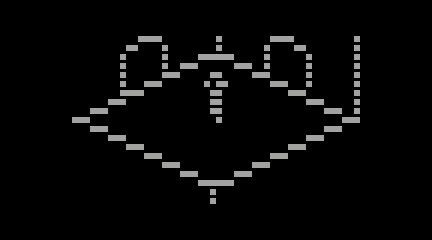
Own screenshot in Stella of the 2021 ROM (
animZ4.bin), with both alternating fields combinedVideo: VH Soft on YouTube